
Teaching science to young children can be incredibly rewarding, BUT it can also be challenging.
How do you take a scientific concept and turn it into something they can see, understand, talk about and, at the same time, make it fun and memorable?
This is one of the reasons I love teaching nature, animals and their habitats.Animal habitat units naturally invite children to ask questions. Where does a polar bear live? Why doesn’t it live in the desert? How does a fish survive underwater? What does a rainforest provide for the animals that live there?
Suddenly, science becomes a little less about memorizing facts and a lot more about wondering how the world works, which if you ask me is the actual point of science.
Why Is It Sometimes Difficult to Make Science Interesting for Kids?
Science is full of fascinating ideas, but young learners don’t always agree, and it mainly has to do with the way we present it to them.
A worksheet can ask a child to match an animal to its habitat. A textbook can explain that animals need food, water, shelter, and space. These things are important and I do believe that worksheets help consolidate ideas and put down into words what we are learning. But children often understand them much more easily when they have an opportunity to see, explore, sort, build, discuss, and make connections. Spice things up a little. There is time and space for the worksheet and a more relatable activty.
Hands-on activities can help bridge that gap.Instead of simply telling students that a habitat is an animal’s environment, we can give them the opportunity to construct one. Instead of asking students to memorize which animals live in a particular habitat, we can ask them to think:
“If this is where the animal lives, what does it need here to survive?”
Those small changes can make science feel much more meaningful.
Animal Habitat Diorama Craft for Kids
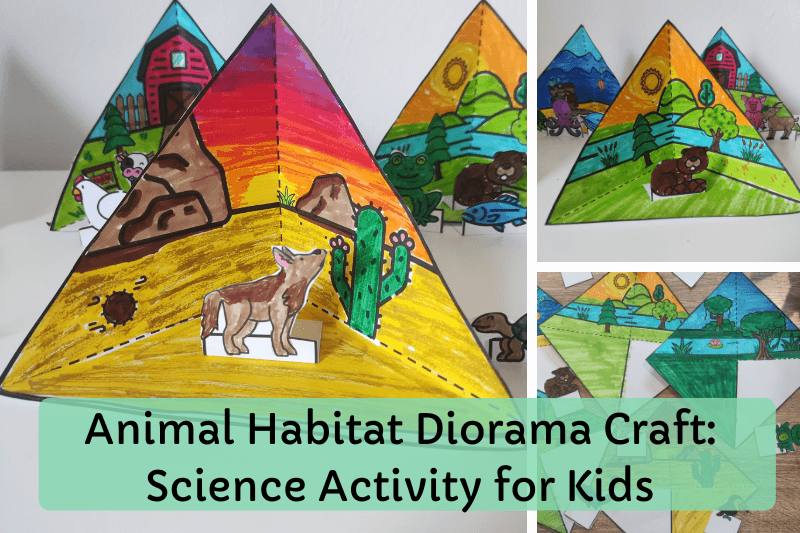
One of my favorite ways to introduce or review animal habitats is with a triorama.
A triorama is a simple 3D paper project that creates a small scene that students can build and decorate.
Students can:
- ✂️ Cut out the pieces
- 🎨 Color and decorate their habitat
- 🦁 Add animals to the scene
- 🌎 Explore different environments
- 🧠 Review where different animals live
The activity is simple enough to use in an elementary classroom while still giving students plenty of opportunities to talk about science.
15 Animal Habitats to Explore
his Animal Habitat Triorama Craft includes 15 different habitats, giving students plenty of opportunities to explore the diversity of animal environments.
The habitats include:
- Arctic
- Antarctic
- Mountain
- Farm
- Freshwater
- Beach
- Desert
- Savannah
- Forest
- Rainforest
- Sea
- City
- US Desert
- Prairie
- Bamboo Forest
Each habitat includes four animal species, so students can explore not only the environment but also the animals that live there. This makes the activity flexible enough to use with different animal habitats units throughout the year.

How to Use This Animal Habitat Craft
1. Introduce a New Habitat
Introduce one habitat at a time and use the triorama as a follow-up activity. For example, after learning about the rainforest, students can create a rainforest habitat and add animals that live there.
2. Review an Animal Habitats Unit
Use the craft at the end of your unit as a hands-on review activity. Students can demonstrate what they have learned by matching animals to their habitats and creating their own 3D scenes.
3. Create a Science Center
Set up a habitat-building station where students can work independently or in small groups. This can work particularly well for:
- Science centers
- Early finishers
- Small-group activities
- Independent work
- Review days
4. Create a Classroom Display
Once students finish their trioramas, display them together to create an animal habitats classroom display.
You could organize the projects by habitat or create a whole “Animals and Their Habitats” display. This gives students the chance to see how different environments support different kinds of animals.
Animal Habitats + ESL / ELL Learning
Animal habitat activities can also be useful in ESL and ELL classrooms.
Because students are working with visual and concrete materials, the activity provides plenty of opportunities to practice science vocabulary while doing something hands-on.
You can use the project to practice vocabulary such as:
- habitat
- animal
- forest
- desert
- ocean
- mountain
- rainforest
- farm
- water
- land
You can also encourage students to use simple speaking frames:
- “A ___ lives in the ___.”
- “This is a ___ habitat.”
- “The ___ lives in the ___.”
- “Animals need ___ to survive.”
This makes the activity useful for teachers who want to combine science and language learning.
What Skills Does This Activity Practice?
A habitat diorama isn’t just a craft project.
While students are creating their habitats, they can practice:
- Animal and habitat vocabulary
- Science observation
- Classification
- Speaking and discussion
- Fine motor skills
- Cutting and gluing
- Creativity
- Following directions
- Understanding animal environments
For younger students, the cutting, folding, and gluing also make the activity a useful fine motor practice.
For older students, you can extend the activity by asking them to research an animal or explain why a particular habitat meets its needs.

Easy Ways to Extend the ActivityResearch an Animal
Have students choose one animal from their habitat and find out:
- What does it eat?
- Where does it live?
- What does it need to survive?
- What adaptations help it live in its habitat?
Compare Two Habitats
Ask students to compare two different habitats.
For example:
How is the desert different from the rainforest?
Students can identify differences in climate, plants, animals, water, and shelter.
Animal Sorting Activity
Give students pictures or names of different animals and ask them to sort them by habitat.
This works particularly well as a warm-up before students start building their dioramas.
Writing Extension
After completing the craft, students can write a few sentences about their habitat.
For example:
“This is a rainforest habitat. A jaguar lives here. The rainforest has lots of trees and rain.”
This turns a simple craft into a science + writing activity.
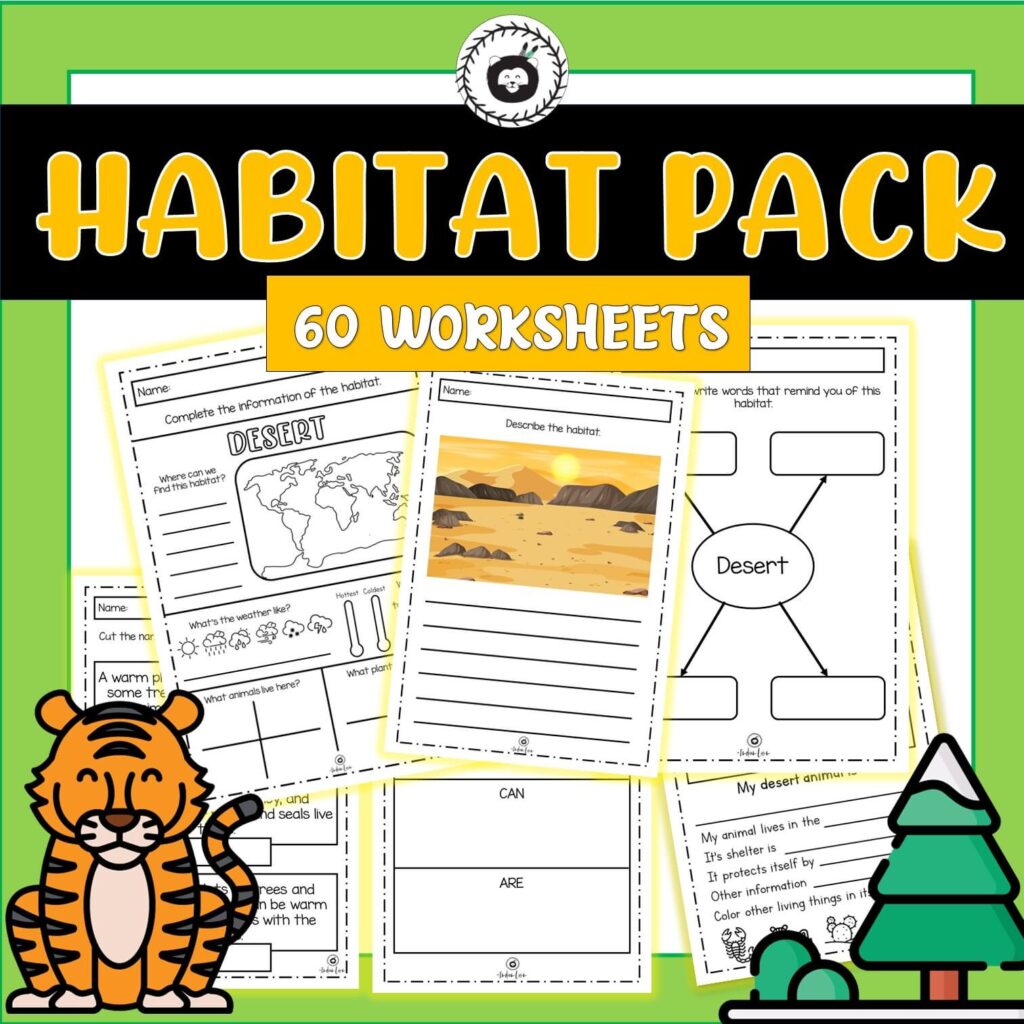
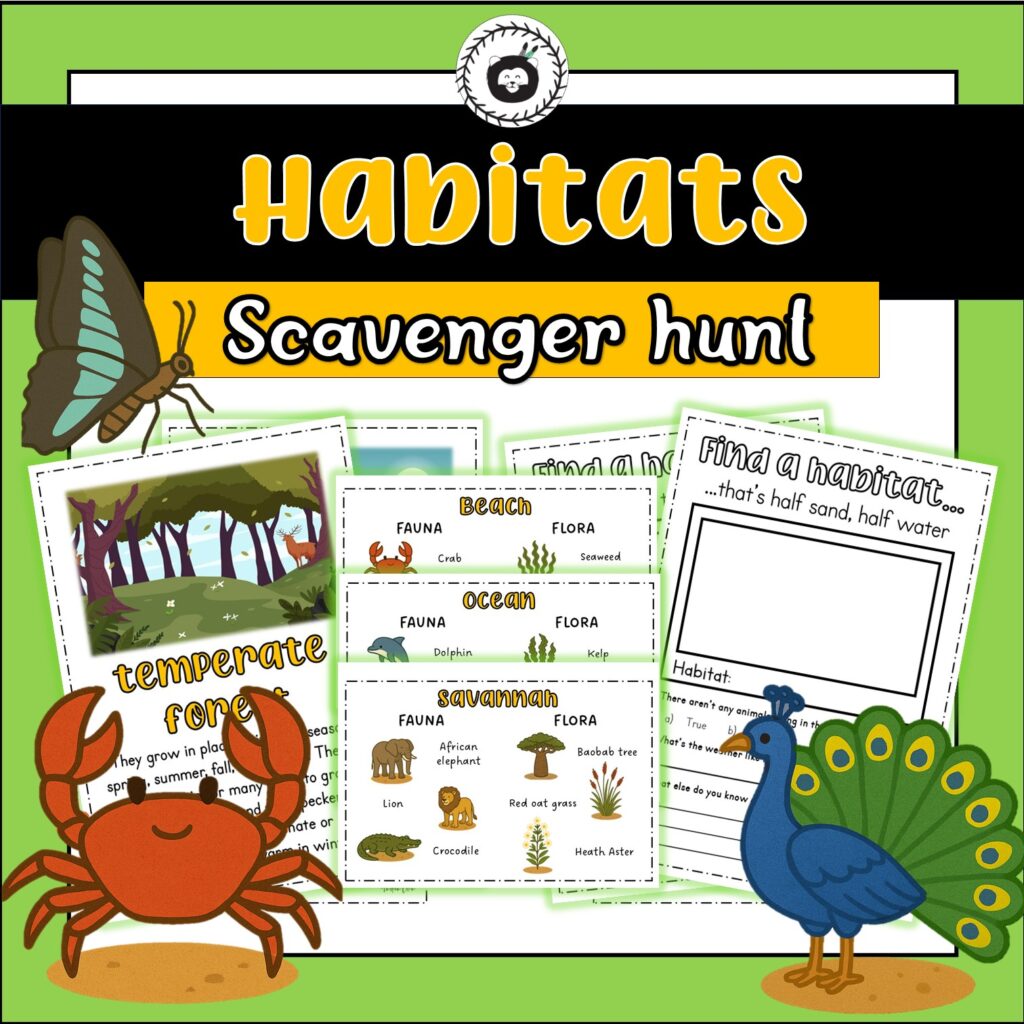
Habitat Worksheet pack
🦁 Ready to Build Your Own Animal Habitat Diorama?
I created an Animal Habitat Triorama Craft with 15 different habitats and four animal species for each habitat.
It’s designed as a simple, hands-on science activity that can be used for animal habitats lessons, science centers, review activities, classroom displays, or an end-of-unit project.
[Get the Animal Habitat Triorama Craft on Teachers Pay Teachers →]
If you’re teaching animals and their habitats, this is an easy way to bring a little more creativity and hands-on learning into your science lessons.

¡Forma parte de la manada!
Join our mailing list to receive the latest news and updates from our team.
¡Ya eres parte de la manada!